


I'm Abdel, a McDonald's crew member. Every restaurant runs out of something or has a machine out of service at times, and the words you choose can change how a guest feels about it. I have seen how much a calm, honest answer can help.
Menus, offers, refund rules, and approved responses may vary by market, franchise organization, and restaurant. Follow your restaurant's guidance, and ask your manager when you are unsure what you can offer.
Why this small moment matters
To you, an unavailable item may be one of many small problems in a shift. To a guest, it could be the whole reason they came. A child may have been promised dessert. A person may have seen an offer and made a special trip. Disappointment is a reasonable reaction.
You cannot always fix the situation. You can, however, make sure the guest feels respected and has a clear next step.
Know before they ask
Being surprised at the register makes everything harder. At the start of your shift, and whenever things change, try to find out:
- Which items are unavailable.
- Whether it is temporary, and if you know when it may return.
- What alternatives are available.
- Whether your manager wants guests told anything in particular.
If your restaurant can update menu boards, kiosks, or the app, let your manager know right away when something runs out. It can save several guests from disappointment.
A simple way to say it
A good response usually has three parts: an apology, the plain fact, and something helpful to offer.
I'm sorry, we're out of that right now. Could I offer you something similar instead?
I'm sorry, that machine isn't working at the moment. We do have other desserts and drinks available, if you'd like one.
Be direct and calm. Do not make the guest guess, and do not build up to it with a long explanation. Keep the tone warm and offer the next step right away.
Words that help and words that hurt
| Instead of | Try |
|---|---|
| "We don't have that." | "I'm sorry, we're out of that right now." |
| "The machine's broken again." | "That machine isn't available at the moment." |
| "It's not my fault." | "I understand that's disappointing." |
| "I don't know when it's coming back." | "I'm not sure when it will be back, but I can ask my manager." |
| "You'll have to pick something else." | "May I suggest something similar?" |
Be careful not to criticize your restaurant or team in front of guests. Comments like "This always happens" may feel honest, but they make the guest lose confidence and can make your teammates look bad.
Offering a good alternative
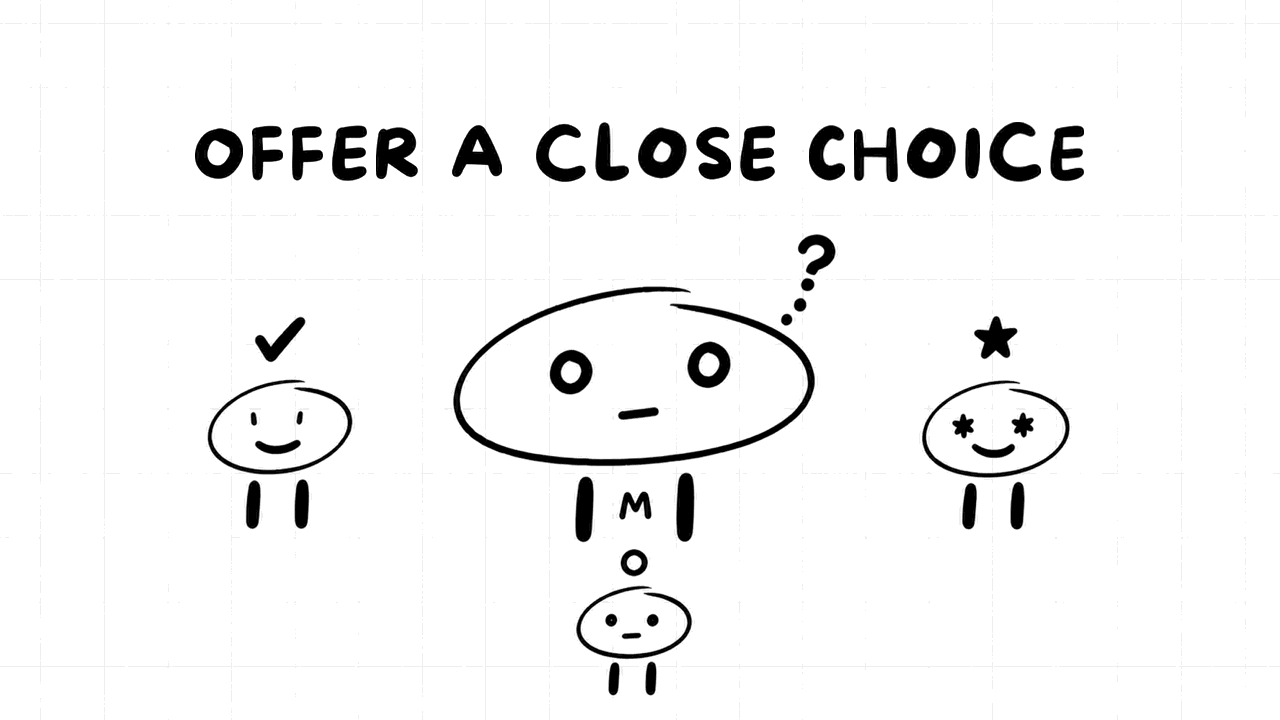
A useful suggestion shows that you were listening:
- If they wanted a cold, sweet treat, suggest another cold dessert.
- If they wanted a particular sandwich, ask what they liked about it. Was it the chicken? The size?
- If a meal is affected, check what can be changed. Your manager can help you handle anything you are unsure of.
Keep your suggestion short, and let them make the choice. If they do not want anything else, accept it gracefully:
No problem at all. I'm sorry we couldn't get that for you today.
When it affects an offer or app order
This can be more complicated. If a guest cannot use an offer because an item is unavailable, or if they have paid for something in the app that you cannot supply, do not make up a solution. Follow your process and involve your manager.
Be honest about what you can do:
I want to make sure we get this right for you, so let me get my manager to help.
Do not promise refunds, replacements, or free items unless you are authorized to do so. A promise you cannot keep usually makes the problem worse.
When a guest becomes upset
Most guests will accept the news with a sigh. A few may become frustrated or take it out on you. It helps to:
- Stay calm. Keep your voice steady and even.
- Acknowledge how they feel. "I understand. I'm sorry, I know you were looking forward to it."
- Do not argue or over-explain. A long explanation about the machine rarely helps.
- Offer what you can. An alternative, a manager, or the correct process.
- Bring in your manager if it gets heated or goes beyond your authority.
Remember that their frustration is usually about the situation, not you. Nobody has the right to abuse you, though. If a guest becomes threatening or insulting, get your manager and follow your restaurant's approach. This guide on handling complaints has more detail on this.
Keeping your team in the loop
Information only helps if everyone has it. If you find out something is unavailable:
- Tell your manager, unless they already know.
- Make sure counter, drive-thru, and kiosk teams know.
- Pass it on at shift change.
- Tell your team when the item is back, too.
There is little worse for a guest than being told one thing at the drive-thru speaker and another at the window. Good communication avoids that. If you would like to learn how leaders handle these moments, read about what a Guest Experience Leader does.
Drive-thru and delivery situations
At the drive-thru, tell the guest as soon as you know, ideally at the speaker. If you discover a problem after they have already ordered, let them know as soon as you can, and do not wait until they reach the window.
For delivery orders, follow your restaurant's process and involve your manager. The guest is not there, and you may have to make changes through the delivery system. Never just leave an item out and hope for the best.
Practice before you need it
These words come more easily if you have said them before. Try practicing your apology and one suggestion during a quiet moment. Then, when a guest asks for something you do not have, you will not need to search for what to say. You might even ask an experienced teammate how they usually phrase it, and then find a version that sounds like you.
Final thoughts
You cannot always give guests what they came for, but you can always treat them well. Apologize once, state the facts clearly, offer a good alternative, and ask for help when you need it.
Guests rarely remember the item they could not have. They tend to remember how you handled it.


