


I'm Alex. I started as a crew member, later worked as a Crew Trainer and Guest Experience Leader, and now work as a McDonald's Shift Manager with more than five years of management experience. Because I progressed through these roles myself, I pay close attention to how potential is identified and developed. The best candidates usually begin showing leadership before anyone offers them a title.
Role structures can vary by restaurant and market. Some organizations use Shift Leader as a regional equivalent to Shift Manager. In this article, I use Shift Manager for the formal management role and Crew Trainer and Guest Experience Leader (GEL) for the leadership-development roles that often help people prepare for greater responsibility.
Leadership potential appears before the title

During an early breakfast shift, I watched a quiet crew member named Maria notice that orders were beginning to back up. She communicated with nearby crew members, adjusted her own pace, and helped keep the station organized without creating confusion. Months earlier, she had been hesitant to speak during a rush.
Her development was not based on one impressive moment. It came from consistent behavior, coaching, and gradually increasing responsibility. That distinction matters. Would you trust the person on an ordinary shift, when no one is watching closely? A promotion should never rest on one strong rush or a manager's personal preference.
I look for patterns such as:
- Staying calm when demand changes.
- Following food safety and operating procedures consistently.
- Helping other crew members without neglecting assigned responsibilities.
- Asking useful questions and applying feedback.
- Communicating concerns early.
- Taking responsibility for mistakes.
- Treating guests and team members respectfully.
Understanding the roles
Shift Manager
A Shift Manager is responsible for coordinating an assigned shift. The role includes positioning the team, monitoring operations, protecting safety and quality standards, managing breaks and deployment, responding to guest concerns, and making decisions within the authority of the position. Readers considering that path can explore what the Shift Manager role is really like before deciding whether the responsibility fits them.
A strong candidate needs more than station speed. I look for judgment, emotional control, clear communication, and the ability to see how one decision affects the whole restaurant.
Before promotion, a candidate should demonstrate that they can:
- Prioritize safety and quality under pressure.
- Give clear, respectful direction.
- Delegate rather than attempting to do everything alone.
- Respond to unexpected changes without blaming the team.
- Coach crew members privately and specifically.
- Recognize when an issue requires escalation.
Crew Trainer
Crew Trainer is a leadership-development role and a common step toward management, but it is not itself a management position. Crew Trainers help new crew members learn approved procedures, understand standards, practice tasks, and receive constructive feedback.
The best Crew Trainers do not simply perform a task well. They can explain it in a way another person understands. They are patient, observant, accurate, and willing to adjust their approach to different learning needs.
I once worked with a Crew Trainer colleague named James. James was particularly good at noticing small quality and safety details, but his greatest strength was explaining why those details mattered. New crew members were more likely to remember a procedure when they understood its purpose. My own journey from crew member to Crew Trainer shows how that same responsibility changed the way I understood leadership.
For a Crew Trainer candidate, I look for:
- Reliable knowledge of the person's current stations.
- Consistent use of approved procedures.
- Patience and respect during correction.
- The ability to demonstrate a task step by step.
- Accurate training documentation where required.
- Willingness to ask a manager when unsure.
Guest Experience Leader
A Guest Experience Leader focuses on the guest's experience in and around the service area. Depending on the restaurant, responsibilities may include greeting, assisting with ordering options, monitoring the dining area, helping address service concerns, and communicating guest needs to the wider team.
The role requires empathy, situational awareness, and confidence. A strong GEL candidate notices people without becoming intrusive and can remain composed when a guest is frustrated. For a fuller picture of the day-to-day work, read what I learned as a Guest Experience Leader.
For a GEL candidate, I look for:
- Clear and welcoming communication.
- Awareness of cleanliness, safety, and accessibility needs.
- Good judgment about when to act and when to involve a manager.
- The ability to listen without becoming defensive.
- Respect for every guest and team member.
- Interest in improving customer service.
How to identify readiness
Consistency under pressure
A candidate should maintain standards across many shifts, not only when a manager is watching. I consider whether the person stays dependable during peak periods, staffing changes, and routine work.
Trust from the team
Other crew members often reveal who is already acting as a reliable resource. Do people ask the candidate for help? Does the candidate explain without making others feel embarrassed? Do they support the team or use knowledge to establish superiority?
Team trust is useful evidence, but it should not become a popularity contest. A well-liked person may still need development in accountability or procedure knowledge.
Response to feedback
Potential leaders do not need to be perfect. I am more interested in what they do after correction. Someone who listens, asks a clarifying question, and improves is often more ready than someone who avoids all feedback.
Motivation for the role
I ask candidates why they want the position. More hours, recognition, or career growth may all be part of the answer. I also want to hear an understanding of the responsibility: helping others learn, protecting standards, supporting guests, or leading a shift fairly.
Making the promotion successful
Choosing the person is only the beginning. A promotion without training and follow-up can place a capable person in a role they have not been prepared to perform. The real test is what support happens after the announcement.
The first week
- Explain the role, authority, and limits clearly.
- Pair the person with an experienced role model.
- Begin with manageable responsibilities.
- Schedule time for questions away from the busiest periods.
- Confirm which training materials and checklists apply.
The first month
- Increase responsibility gradually.
- Hold regular, specific check-ins.
- Observe performance on different shifts where possible.
- Correct problems early and privately.
- Recognize progress without overstating readiness.
Ongoing development
- Set clear goals tied to the role.
- Provide refreshers when procedures change.
- Ask what support the person needs.
- Discuss the next development step without promising a promotion.
- Keep decisions connected to documented performance and restaurant needs.
When the transition is difficult
Not every promotion goes smoothly. A new leader may struggle with confidence, communication, technical knowledge, or the transition from peer to leader.
For a performance problem, I identify the specific behavior, provide training or coaching, set a reasonable expectation, and follow up. For resistance from the team, I listen to legitimate concerns while supporting the new leader's authority appropriately. Public support should never replace private accountability.
Sometimes the best decision is to pause development or reconsider the role. That should be handled respectfully and according to the restaurant's approved process. A difficult transition does not mean the person cannot grow; it means the current support or role match may need to change.
Final thoughts
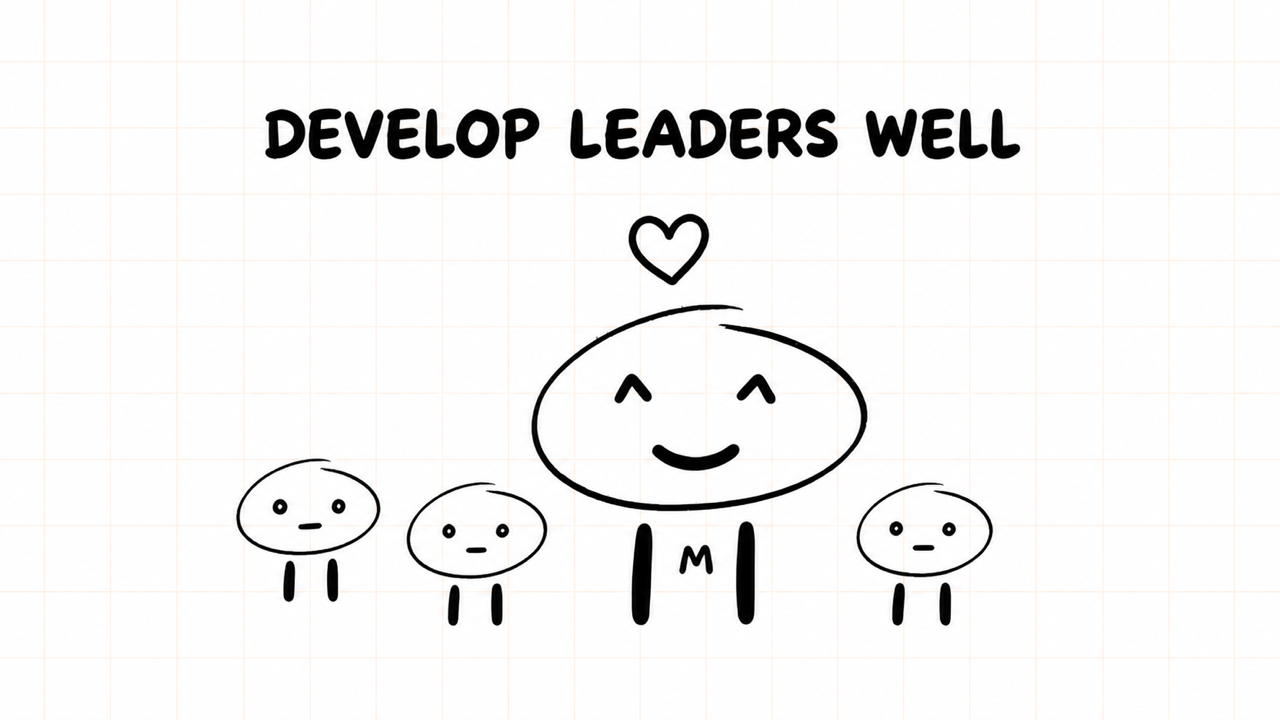
Good restaurant leaders are developed through observation, clear expectations, training, feedback, and time. Technical skill is important, but leadership also depends on judgment, communication, fairness, and the ability to help other people succeed.
When managers select people carefully and continue supporting them after promotion, leadership development strengthens the whole restaurant. The goal is not simply to fill the next opening. It is to prepare someone to carry the responsibility well.


